How Messaging Powers the Customer Lifecycle: From OTP and Onboarding to Loyalty and Re-Engagement
 by
by
GMS Team
Customer relationships are not usually lost in dramatic moments. More often, they are won or lost in small ones.
A code arrives instantly, or it does not. A checkout question is answered in time, or it is not. A delivery update reassures the customer, or silence creates doubt. A loyalty reminder makes the next purchase feel worthwhile, or the programme fades into the background.
That is why messaging now deserves a more central place in lifecycle strategy. It is no longer just a campaign add-on, a service alert, or a last-mile communication tool. It increasingly shapes whether customers complete registration, finish a purchase, feel supported after buying, and come back again.
This matters because customer intent is fragile. In e-commerce, the average cart abandonment rate remains high at 70.19%, a useful reminder that even interested customers can drop off when friction arises at the wrong moment.
The brands that perform well across the lifecycle are often not the ones making the most noise. They are the ones removing the most friction. In practice, that means thinking more carefully about where messaging fits, what each channel should do, and how AI can make those interactions timelier and more relevant.
The lifecycle starts earlier than many brands think
Lifecycle marketing is often discussed as if it starts with the welcome email, the first promotional message, or the first personalised offer.
In reality, the journey usually starts earlier.
It starts when a customer tries to register, verify their number, confirm their identity, recover an account, approve a payment, or complete a booking. These are often treated internally as technical or operational steps, yet customers experience them as part of the brand itself.
That is why A2P messaging plays such an important role at the beginning of the relationship. OTPs, verification messages, sign-up confirmations, payment alerts, account recovery messages, and service notifications may reside in different systems within the business, but for the customer they form a single, connected experience.
A fast OTP helps the customer move forward. A delayed one interrupts momentum. A clear confirmation message builds trust. A missing or late one creates uncertainty before the relationship has properly begun.
This is also why authentication should not be separated from customer experience thinking. Security matters, of course, but so does flow. When verification works smoothly, customers feel that the brand is organised, dependable, and easy to deal with. When it does not, even strong intent can stall at the first hurdle.
Messaging is no longer at the edge of the journey
For a long time, messaging was treated as something that sat around the customer journey rather than inside it. The website, app, store, or call centre did the real work, and messaging was simply supported from the outside. That is no longer how many journeys work.
Today, customers often move through important stages of the relationship inside messaging environments. They receive codes there. They ask questions there. They get reminders there. They confirm appointments, track deliveries, claim rewards, and respond to offers there.
In other words, messaging is not just supporting the journey. In many cases, it is where part of the journey actually happens.
That matters because messaging is uniquely good at reducing friction. It reaches customers in moments when attention is already active. An omnichannel messaging platform allows brands to orchestrate these channels based on the customer journey stage allows brands to respond while intent still exists. And it creates continuity between stages that might otherwise feel disconnected.
A reminder after a partial checkout, a message answering a product question, an appointment confirmation, a shipping alert, a post-purchase check-in – none of these interactions seems dramatic on its own. But together, they keep the relationship moving.
OTP flows are not only about security
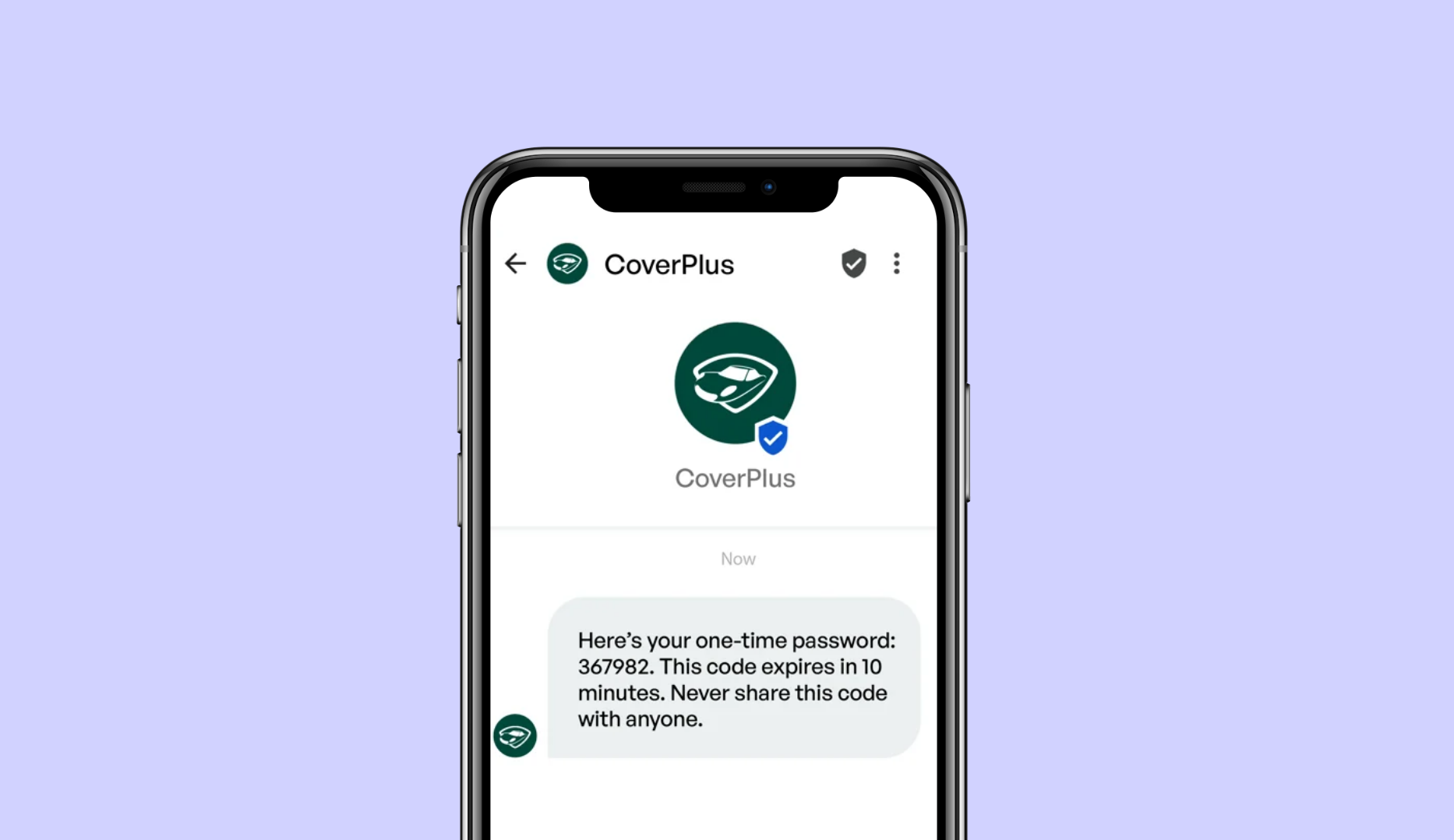
It is easy to think of OTP and authentication messaging purely in technical terms, but customers experience them differently. For them, these are moments of progress or friction. A verification code can be the gateway to activation. A payment confirmation can reinforce trust. An account recovery message can either bring someone back smoothly or make them give up.
That is why OTP flows sit at the intersection of security, convenience, and conversion.
For some brands, RCS Business Messaging adds an extra layer of trust here by combining branded sender identity with richer, more recognisable message formats. In the right use cases, this can help authentication and service messages feel more credible and less anonymous. At the same time, SMS remains indispensable because it offers a wide reach and strong visibility across devices and markets.
The key point is that authentication should not be separated from the customer experience strategy. Secure, dependable messaging helps people complete the actions they already intended to take. And when those first steps feel smooth, the rest of the lifecycle becomes much easier to build on.
Channel roles should be clear, not repeated
One reason lifecycle messaging becomes messy is that brands often ask every channel to do everything. That usually leads to overlap, inconsistent experiences, and communication that feels repetitive rather than connected.
A better approach is to clearly define the role of each channel.
SMS works best when speed, reach, and visibility matter most. It remains highly effective for OTPs, urgent reminders, payment alerts, delivery notifications, appointment confirmations, and other time-sensitive touchpoints where the message simply needs to be seen quickly.
WhatsApp Business is strong when customers need a more conversational approach. It is well-suited to answering questions, assisting with decisions, handling service follow-up, and supporting two-way interactions in a familiar environment.
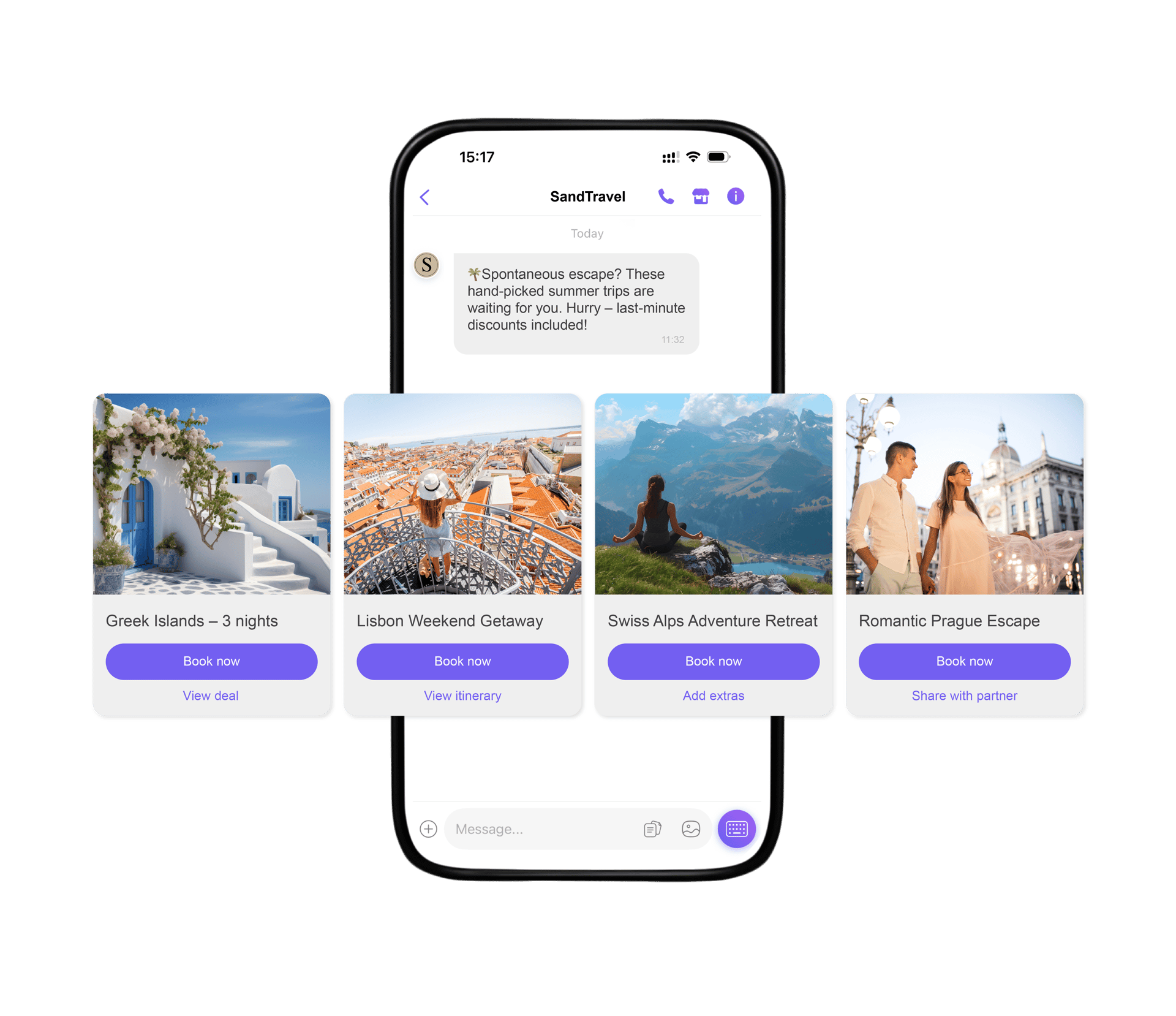
Viber for Business is particularly useful when richer, more visual, or more interactive communication adds value. Promotional journeys, service reminders, loyalty engagement, and guided next steps can all benefit when the customer can see more and act more easily inside the message.
RCS Business Messaging adds value by enabling branded, feature-rich mobile messaging that can improve trust, recognition, and clarity for recipients. The GSMA describes RCS Business Messaging as a way for brands to deliver richer, branded mobile interactions beyond plain text alone.
The opportunity is not to force customers into one preferred channel. It is to match channel capability with customer need at a specific stage of the lifecycle.
That is what makes omnichannel messaging strategic. The goal is not just to be present everywhere. It is to make each interaction feel better suited to the moment.
Where messaging influences conversion most
Messaging has often been framed as a follow-up tool. In practice, it increasingly shapes conversion itself.
A customer who pauses at registration may not need a bigger campaign. They may need the verification step to work the first time.
A customer who hesitates at checkout may not need another landing page. They may need one quick answer about delivery, returns, payment, or stock availability.
A customer comparing options may not need more brand awareness. They may need a richer interaction that helps them understand the offer and act while intent is still there.
This is where timing matters as much as content. A helpful message sent too late is no longer helpful. A discount without context can feel random. A reminder without relevance becomes noise.
Lifecycle messaging works best when it reduces hesitation at the exact moment it arises.
That could mean an OTP sent instantly during sign-up. It could mean a reminder after a partially completed checkout. It could mean a post-purchase message that explains what happens next. It could mean a loyalty update just before points expire. These are not dramatic interventions, but they often have an outsized effect on whether the customer continues or drops away.
AI becomes useful when it solves specific problems
AI is already a strong part of the article, but the real opportunity becomes clearer when tied to concrete use cases rather than broad promises.
The value of AI in lifecycle messaging is not simply that it can automate conversations. It can help brands respond more intelligently to customer behaviour, reduce lag between intent and response, and make journeys feel more connected.
A few practical use cases stand out:
-
Registration and onboarding support
If a customer starts sign-up but does not complete verification, AI can trigger the next best action: resend the OTP, offer an alternative verification path, answer a common onboarding question, or route the user to human support before the drop-off becomes permanent. -
Assisted conversion in chat
When a customer asks about sizing, delivery timing, pricing, eligibility, account setup, or product fit, AI can respond instantly with the right information and only escalate when needed. That is especially useful in channels such as WhatsApp Business or Viber for Business, where the conversation itself can help move the purchase forward. -
Post-purchase reassurance and service deflection
After the transaction, AI can handle order status queries, delivery ETA requests, appointment confirmations, onboarding instructions, refund checks, and basic account questions without forcing the customer to search across multiple systems. -
Loyalty and re-engagement orchestration
AI can identify when a customer is likely to respond to a points reminder, a replenishment message, a service renewal prompt, or a tailored win-back offer. Instead of sending the same message to everyone on a fixed schedule, brands can adapt content, timing, and channel based on previous behaviour.
This matters because customer expectations have moved on. Zendesk reports that 74% of customers expect service to be available 24/7, while 88% expect faster response times than they did a year ago. That makes it harder to deliver relevance and responsiveness through manual workflows alone.
The strongest AI-led experiences do not feel robotic. They feel efficient. They remove waiting, handle repetition well, and make it easier to reach a person when the issue really needs one.
.gif?length=1920&name=Untitled%20design%20(3).gif)
Richer messaging formats are changing what brands can do
Another important shift is that business messaging no longer needs to be purely informational.
In richer channels, a message can do more than notify. It can guide. It can help compare options. It can visualise the offer. It can reduce the number of steps between interest and action.
That matters because many lifecycle interactions benefit from more context, not more copy.
A product recommendation is often more persuasive when the customer can clearly see the offer. A loyalty update works harder when the next action is obvious. A service message becomes more useful when the customer can respond naturally, rather than jumping between systems.
This is one reason richer channels are gaining ground in lifecycle strategies. They do not replace SMS or transactional A2P messaging. They complement them.
A practical journey might look like this: SMS for verification, WhatsApp Business for pre-purchase questions, Viber for Business for a richer promotional or loyalty follow-up, and AI behind the scenes to decide which path makes the most sense next.
That kind of orchestration reflects how customers actually behave. They do not divide their experience into campaign, support, and retention silos. They simply notice whether the brand feels connected and easy to deal with.
Post-purchase communication is where retention often begins
Retention is often discussed as though it starts weeks or months after the sale. In reality, it starts immediately after purchase.
This is the point at which customers most often need reassurance. They want to know the transaction worked, the order is confirmed, the next step is clear, and help will be easy to reach if needed.
That is why post-purchase messaging has such a strong effect on long-term value. It reduces uncertainty at the exact moment when uncertainty is most likely to creep in.
Order confirmations, delivery alerts, onboarding instructions, appointment reminders, account updates, service notifications, and support follow-ups all help answer the same basic customer question: what happens next?
Internally, these may still be categorised as operational messages. Externally, they shape confidence. Customers rarely separate utility from experience. They remember whether the brand remained helpful after the purchase.
A good post-purchase journey does not overwhelm the customer with updates. It removes doubt with the right ones.
Loyalty only works when customers can feel it
Loyalty programmes often struggle for a very practical reason. Customers stop noticing them.
The points may still be there. The rewards may still exist. The tiers may still be technically available. But unless the value is made visible at the right moment, the programme becomes passive.
Messaging is what makes loyalty feel active.
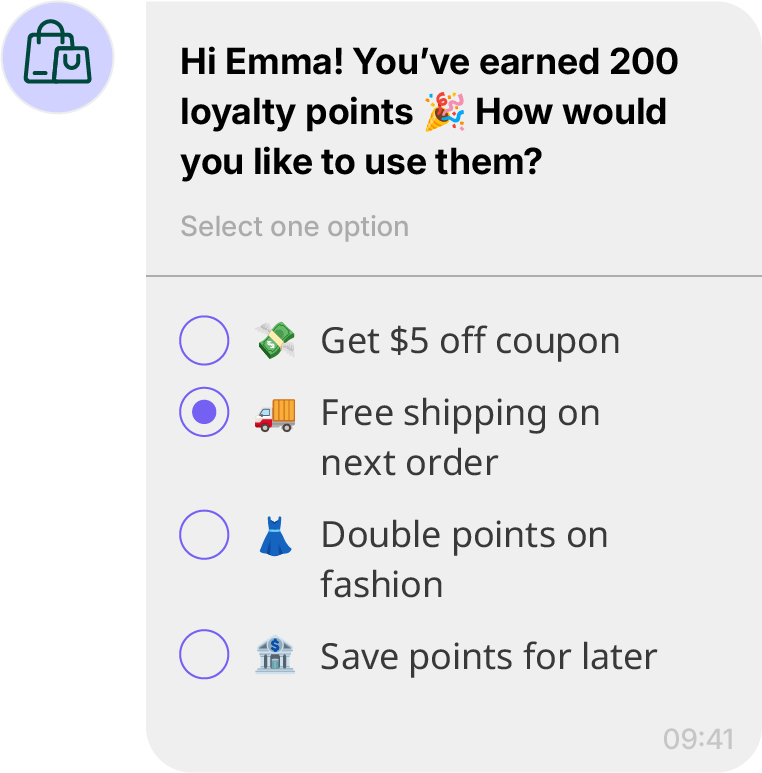
A reminder that points are about to expire. A reward update after a purchase. A personalised offer based on previous behaviour. A member-only benefit delivered through a channel the customer already uses. These are the interactions that turn loyalty from a hidden mechanism into an ongoing relationship.
This is where channel choice matters again.
SMS can work well for short, time-sensitive loyalty prompts. Viber for Business and WhatsApp Business can be more effective when the communication benefits from richer context, stronger visual cues, or a more conversational response path.
The underlying principle is simple: loyalty is not only about programme design. It is also about communication design. If the customer does not see the value in time, the value may as well not exist.
Re-engagement works best when it feels useful
Winning customers back is one of the hardest parts of the lifecycle. Generic reactivation messages often fail because they ask for attention without first rebuilding value. Customers who have gone quiet do not usually need more pressure. They need a reason to care again.
Messaging works better here when it is connected to something genuinely useful: a relevant reminder, a loyalty benefit, a tailored recommendation, a service update, or a prompt that makes returning feel easy.
A customer who previously engaged through WhatsApp Business may respond better there again. A customer who acts quickly on SMS reminders may not need a richer channel. A loyalty member who responds well to personalised offers may benefit from a more visual Viber for Business interaction in the form of Viber Carousels. Re-engagement becomes more effective when the message reflects how the customer has already behaved.
This also is another area where AI can help. Instead of sending the same win-back message to everyone, brands can adapt timing, content, and channel based on previous behaviour, engagement history, or likely interest. That makes re-engagement feel less like a broadcast and more like a continuation of the relationship.
What this means for brands
The broader shift is simple: messaging should no longer be treated as a separate function sitting beside the customer lifecycle. It is increasingly part of the lifecycle itself.
-
It supports activation through OTPs, verification flows, and onboarding communications
-
It supports conversion through reminders, conversational support, and timely offers
-
It supports retention through service updates, post-purchase reassurance, and responsive care
-
It supports loyalty through personalised rewards, member communication, and re-engagement.
AI strengthens this by helping brands create messaging that is more relevant and adaptive. A2P messaging and OTP flows strengthen it by making critical interactions secure and dependable. Richer channels, such as Viber for Business and WhatsApp Business, strengthen it by making engagement more interactive and more natural. SMS remains vital because, at times, it still depends above all on speed, reach, and visibility.
The best customer lifecycle strategies do not treat these as separate workstreams. They treat them as parts of a single communication system, designed around the customer’s real journey.
In Conclusion
The most influential messaging moments are often the least dramatic.
A code that arrives instantly. A question answered before hesitation grows. A delivery update that removes doubt. A loyalty reminder that lands while the reward still matters.
These interactions are small, but they shape how the brand is experienced over time. They influence whether customers complete the journey, return to it, and continue trusting the company behind it.
That is why messaging deserves a larger role in lifecycle strategy. Not because every brand needs to send more messages, but because the right message, on the right channel, at the right moment, can remove friction across the entire relationship.
For teams reviewing onboarding, authentication, AI-enabled support, loyalty communication, or re-engagement journeys, it is worth stepping back and mapping where messaging is helping customers move forward, where channel roles need to be clearer, and where AI can make the experience more responsive rather than more automated. Explore our enterprise messaging solutions and contact our experts to start your journey today!
GMS Team
Stay ahead of industry news
Join our newsletter community to receive the latest updates on industry trends, upcoming events and webinars, and the latest GMS product updates.
More from GMS
Keep up with industry trends and technology advancements.